Physics Conversation Lab
Physics Conversation Lab
Interactive Research Archive: From Boolean Logic to Quantum Simulation
This section documents a complete physics research journey that began with hand-drawn truth table grids and evolved into a working four-page React application. The conversation demonstrates how imaginative exploration, when rigorously checked against real mathematical and physical structures, can yield genuine insights and runnable artifacts.
🎯 The Journey
The conversation unfolded across five major phases:
Part 1: Foundations
Boolean Operators → Quantum Gates → Shannon Expansion
Starting from OR/XOR grids, expanding to all 16 two-input boolean operators, then discovering CNOT as a classical reversible gate. This opened the door to quantum behavior: amplitude vectors, superposition, and the Bell state as genuine entanglement.
Key Discovery: The “first half predicts the second half” optimization for AND/OR/XOR is the recursive construction rule for the Thue-Morse sequence, which is Shannon cofactor expansion — complete with real byproducts (Boolean derivative, existential/universal quantification) used in chip-verification tooling.
Part 2: The Imaginary Universe
XYZT Space & Walsh-Hadamard Expansion
Proposed a four-coordinate space (X=n, Y=redundancy, Z=value, T=recombination-operator) to describe any truth table. Through iterative refinement:
- T isn’t a signed axis
- Its irreversibility differs from physical time’s arrow
- Its real identity: Shannon recursion depth (algorithmic-complexity measure)
Key Discovery: The Walsh-Hadamard (Fourier) expansion provides the math behind “give each function a force vector” — with a genuine physics counterpart in the Ising model’s fields and couplings.
Part 3: The Floor Beneath the Ceiling
Practical Optimization & Quantum Simulation
Real bit-hacking techniques (lookup tables, fast inverse square root, CORDIC) that replace computation with representation. Shannon’s 1949 counting argument shows almost every boolean function has no compact formula — but composing operators (NAND’s functional completeness, bitslicing, circuit minimization) closes the gap.
Key Insight: Nearly everything built corresponds to real, published quantum-simulation research (decision diagrams, stabilizer formalism, universal gate sets, Solovay-Kitaev theorem).
Part 4: Meta-Reflection
The Methodology
Every escalation in scope received the same three-part treatment:
- Take it seriously
- Find the real structure underneath
- Correct the exact point where the framing stops matching it
Resolution: Supplying imagination and holding a line on what’s real aren’t in tension — one is what makes the other durable enough to build on.
Part 5: The Builds
From Theory to Running Code
Everything became runnable, iteratively:
- First 3D visualization (n=2)
- First interactive solver combining Walsh vector, Shannon split, and breadth-first NAND-circuit-synthesis
- Generalized to n=3
- 3-qubit quantum gate composer with live entanglement check
- Everything merged into one unified app with n=0..3 selector
📚 Documentation
| Document | Description |
|---|---|
| Conversation Summary | Narrative walkthrough of the complete arc |
| Topic Map | Idea-tree version of all topics and sub-topics |
| Verbatim Excerpts | Pivotal quotes ready for citation |
| README | Archive organization and navigation guide |
📖 Technical Deep Dives
Boolean Logic & Truth Tables
- 01: Boolean Truth Tables - All 16 operators and beyond
- 02: CNOT & Quantum Vectors - From classical to quantum gates
- 03: Recursive Halving & Shannon Expansion - The optimization that revealed deep structure
Advanced Concepts
- 04: XYZT Space and Time - A four-coordinate framework
- 05: Fourier Analysis and Physics Analogies - Walsh-Hadamard and the Ising model
Practical Limits & Solutions
- 06: Bit Hacking and Complexity Limits - Shannon’s argument and practical optimization
- 07: Circuit Composition and Quantum Simulation - Building quantum simulators
Implementation
- 08: Solvers and Visualizations - From theory to running code
- 09: Meta-Reflection - The methodology behind the method
🎨 Visualizations & Sketches
Hand-drawn images that charted the conceptual journey:
- Sketch 01: OR/XOR Grids A
- Sketch 02: OR/XOR Grids B
- Sketch 03: CNOT State Naming
- Sketch 04: State Vectors and Probability Scale
- Sketch 05: Recursive Halving Optimization
- Sketch 06: Table as Vector (Fuzzy vs Fraction)
- Sketch 07: XYZT Imaginary Space A
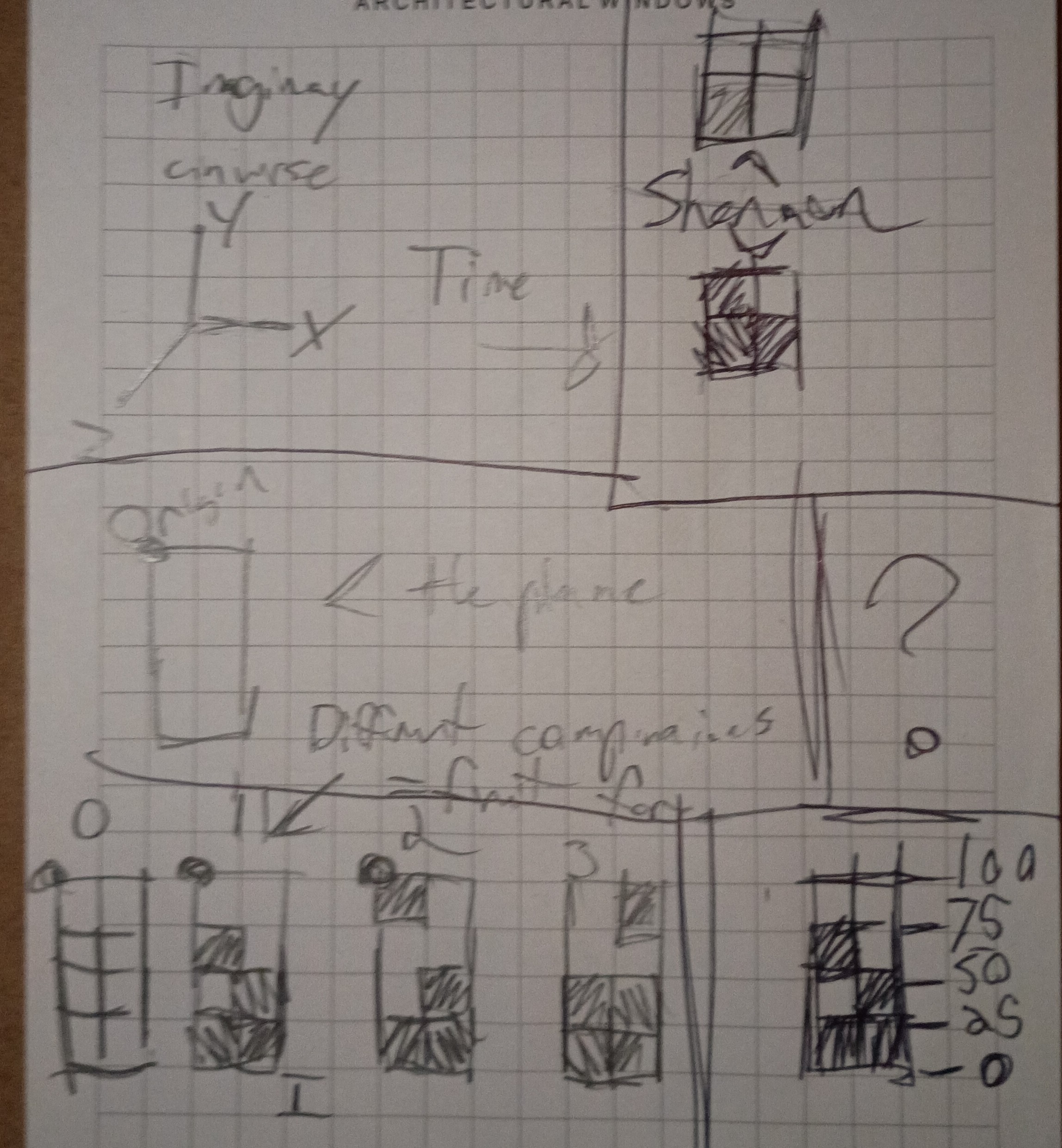
- Sketch 08: XYZT Imaginary Space B
- Sketch 09: Shannon to Time Axes
- Sketch 10: Column Split Reversibility
- Sketch 11: Truth Table Split Left-Right
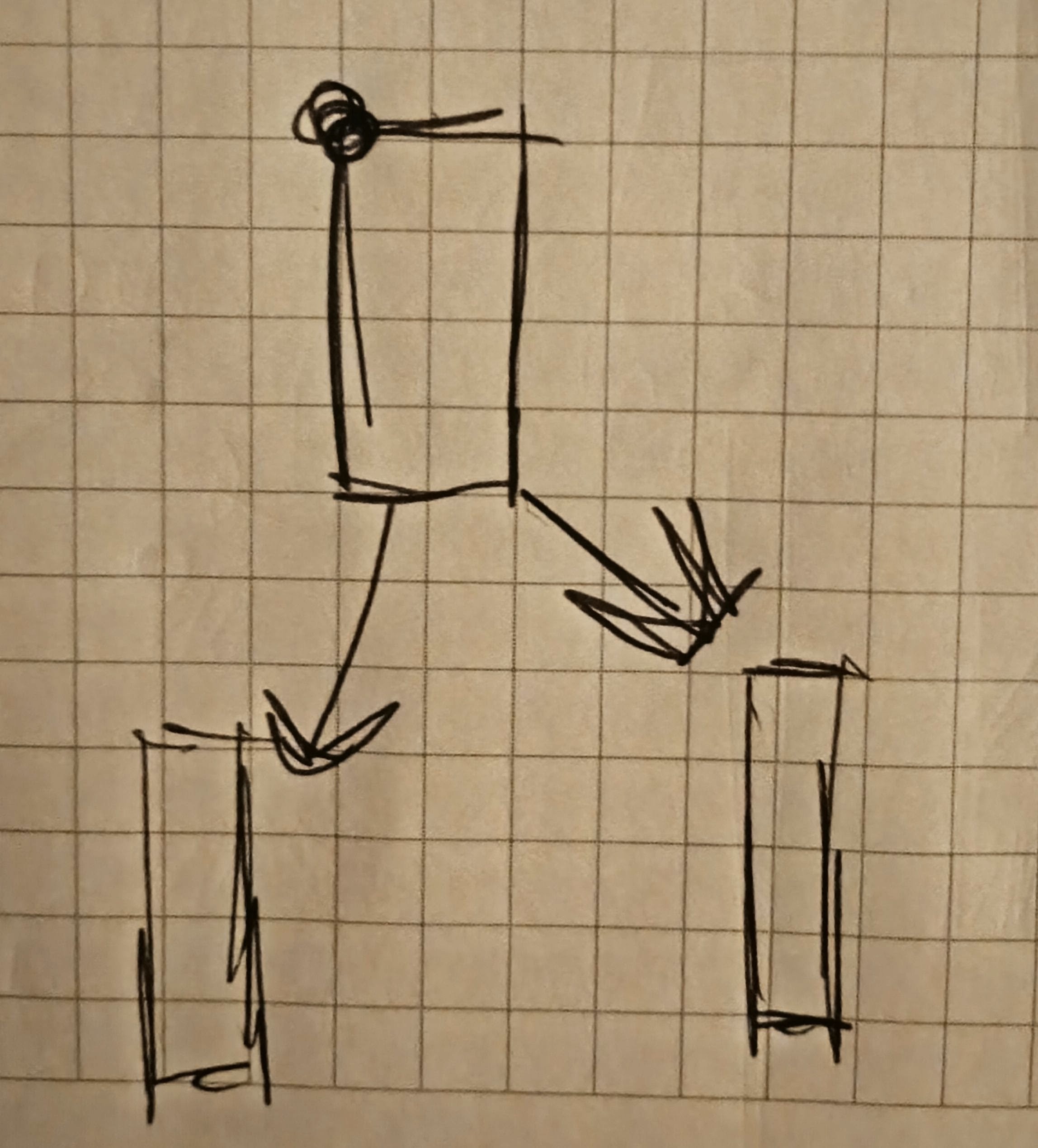
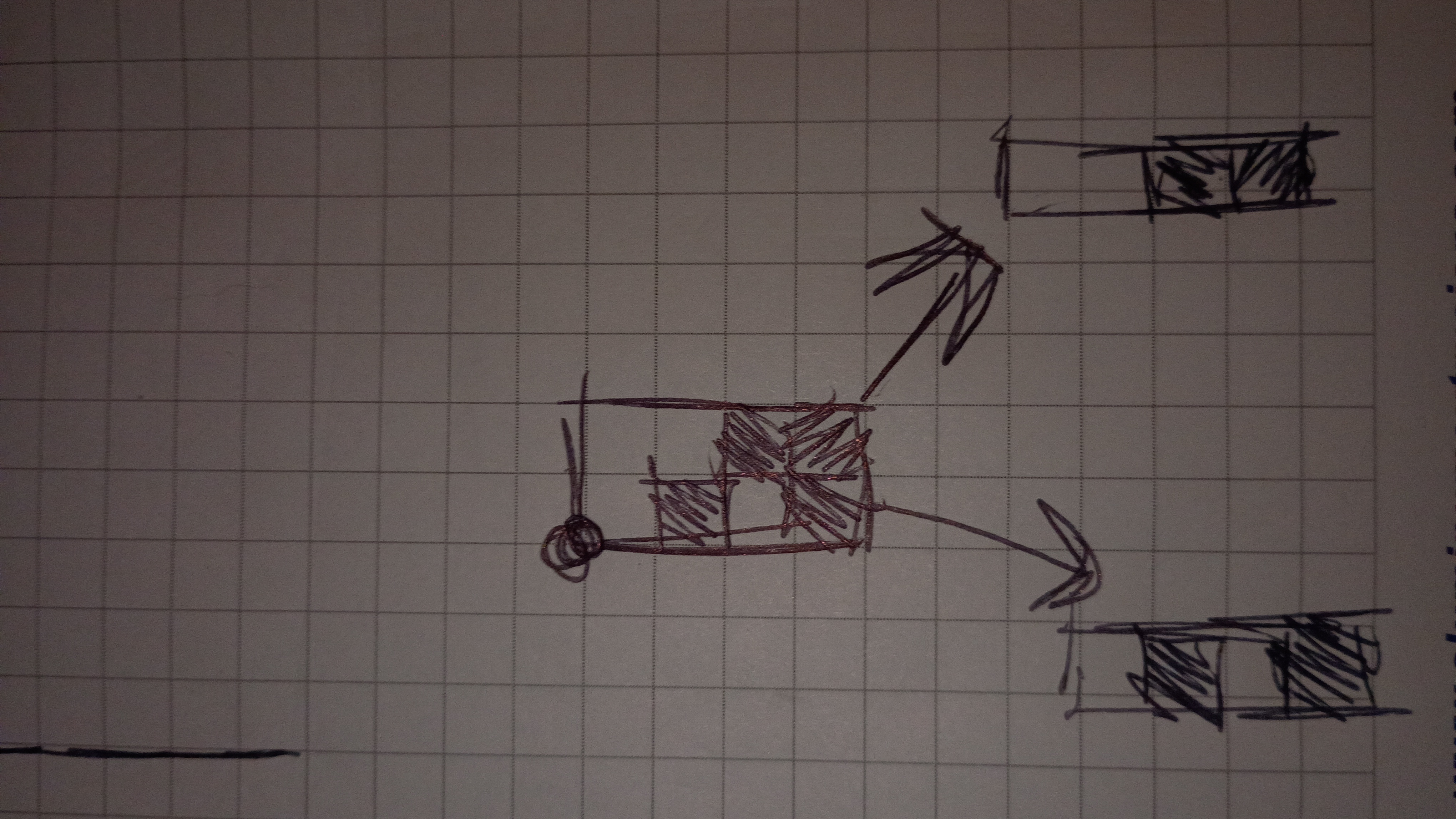
- Sketch 12: Every Combination Split Left-Right
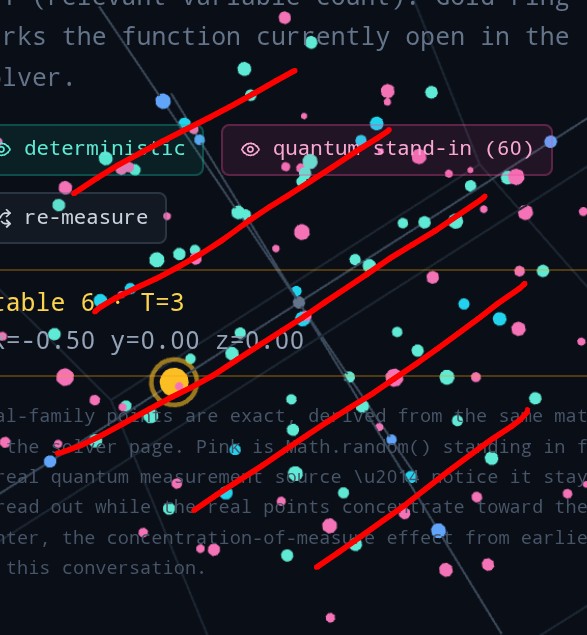
- Sketch 13: Lattice String Annotation
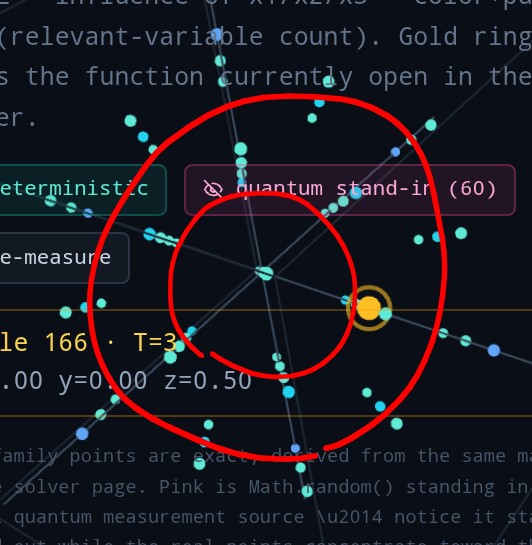
- Sketch 14: Lattice Loop Annotation
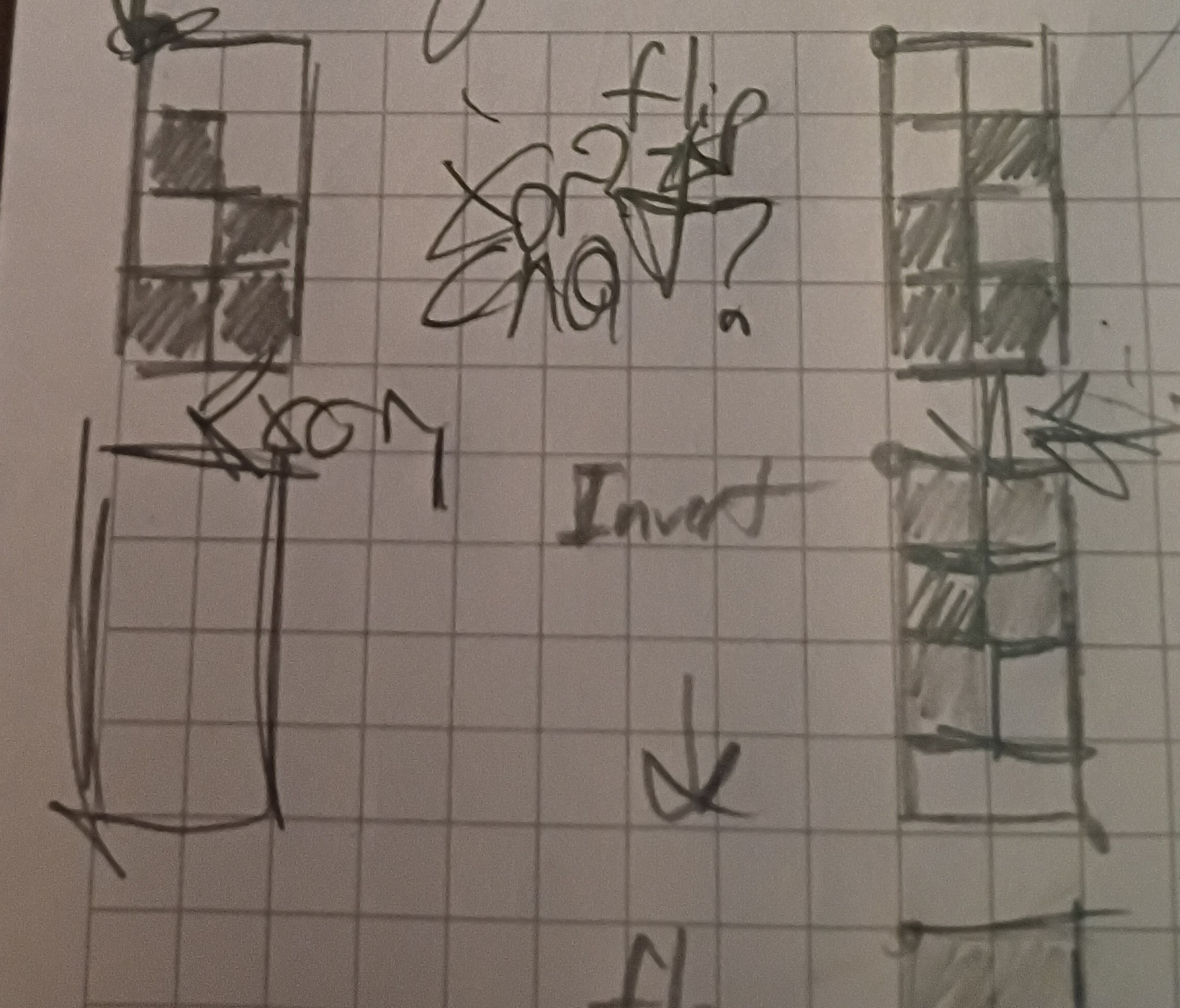
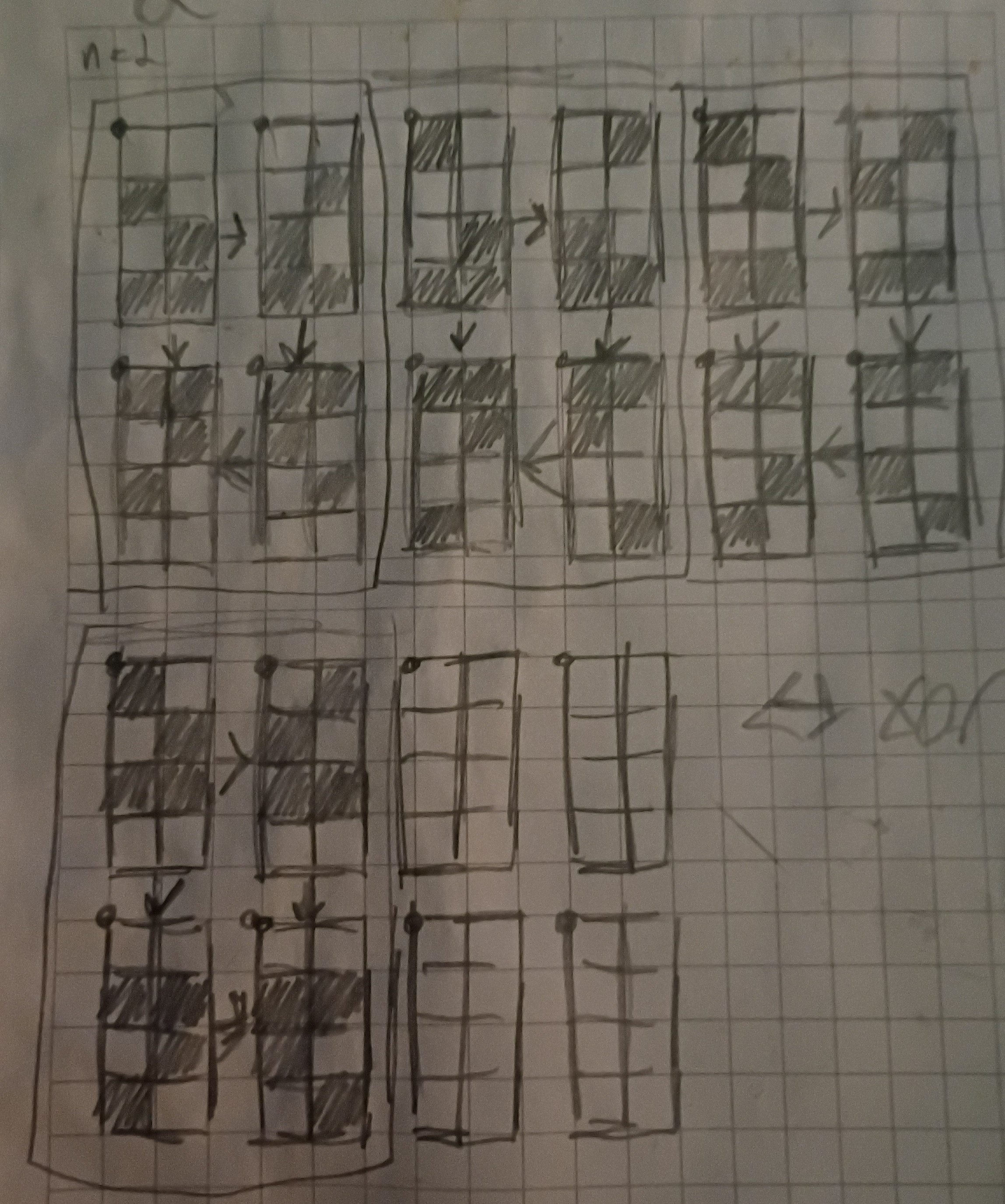
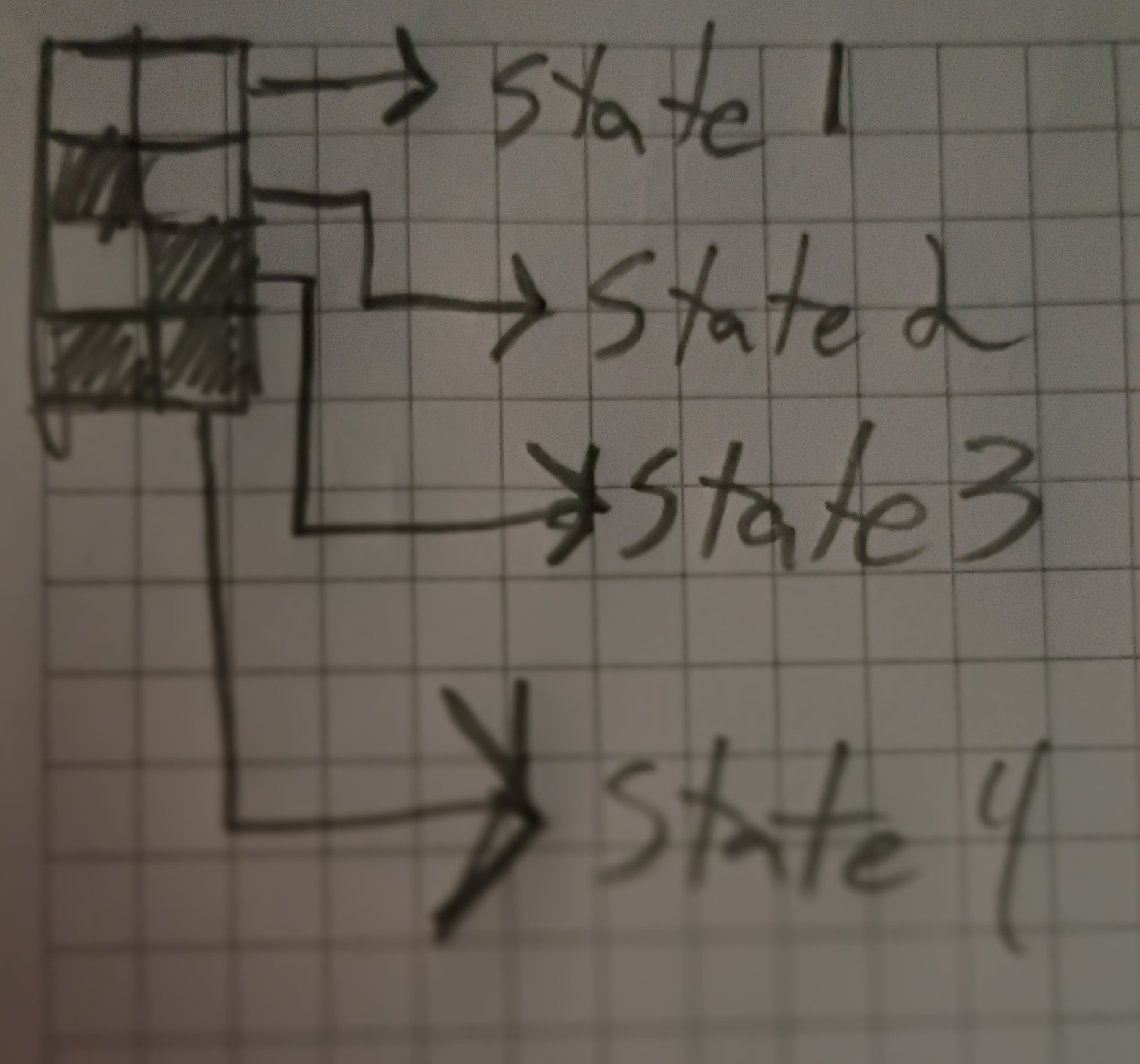
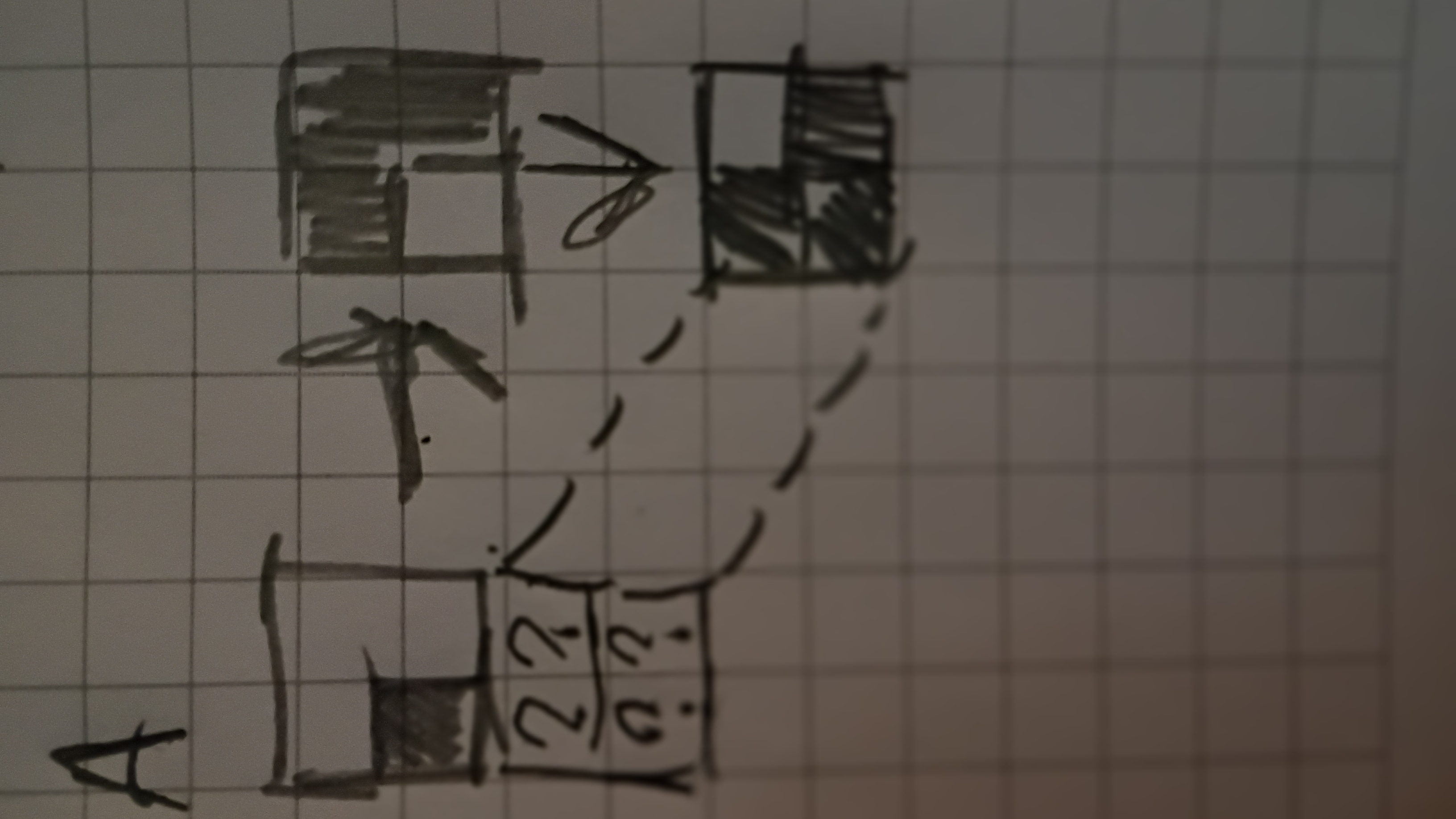
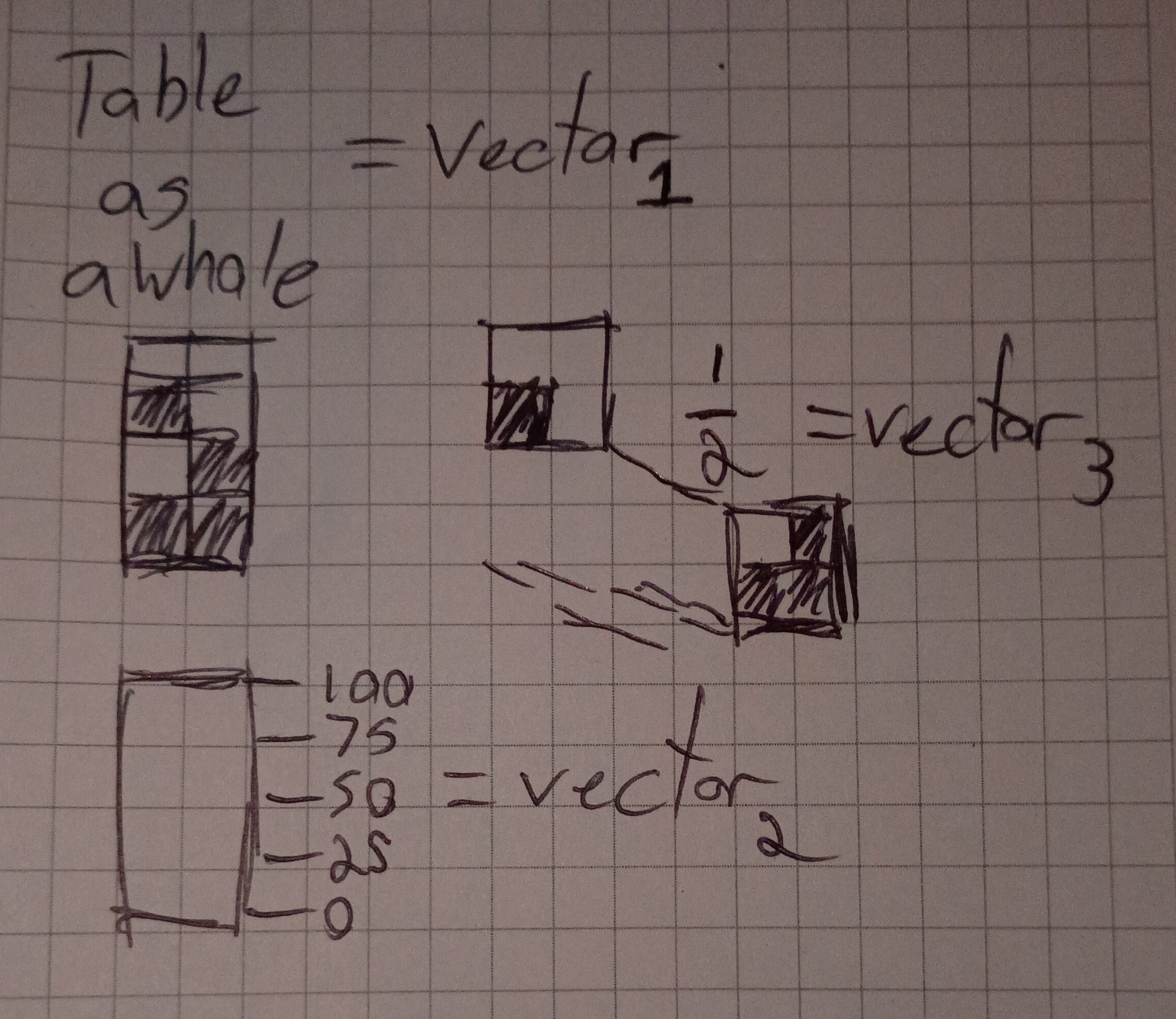
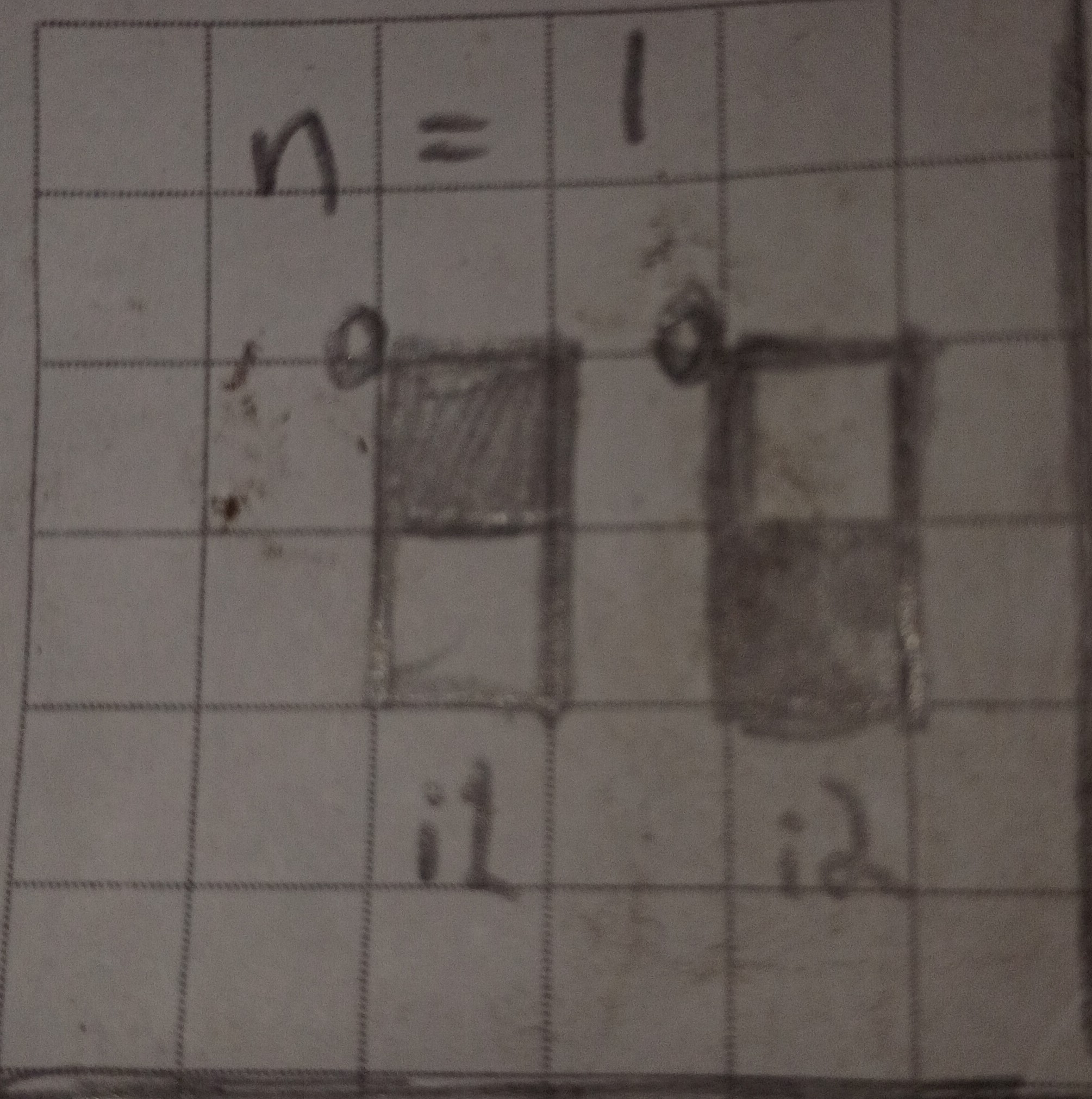
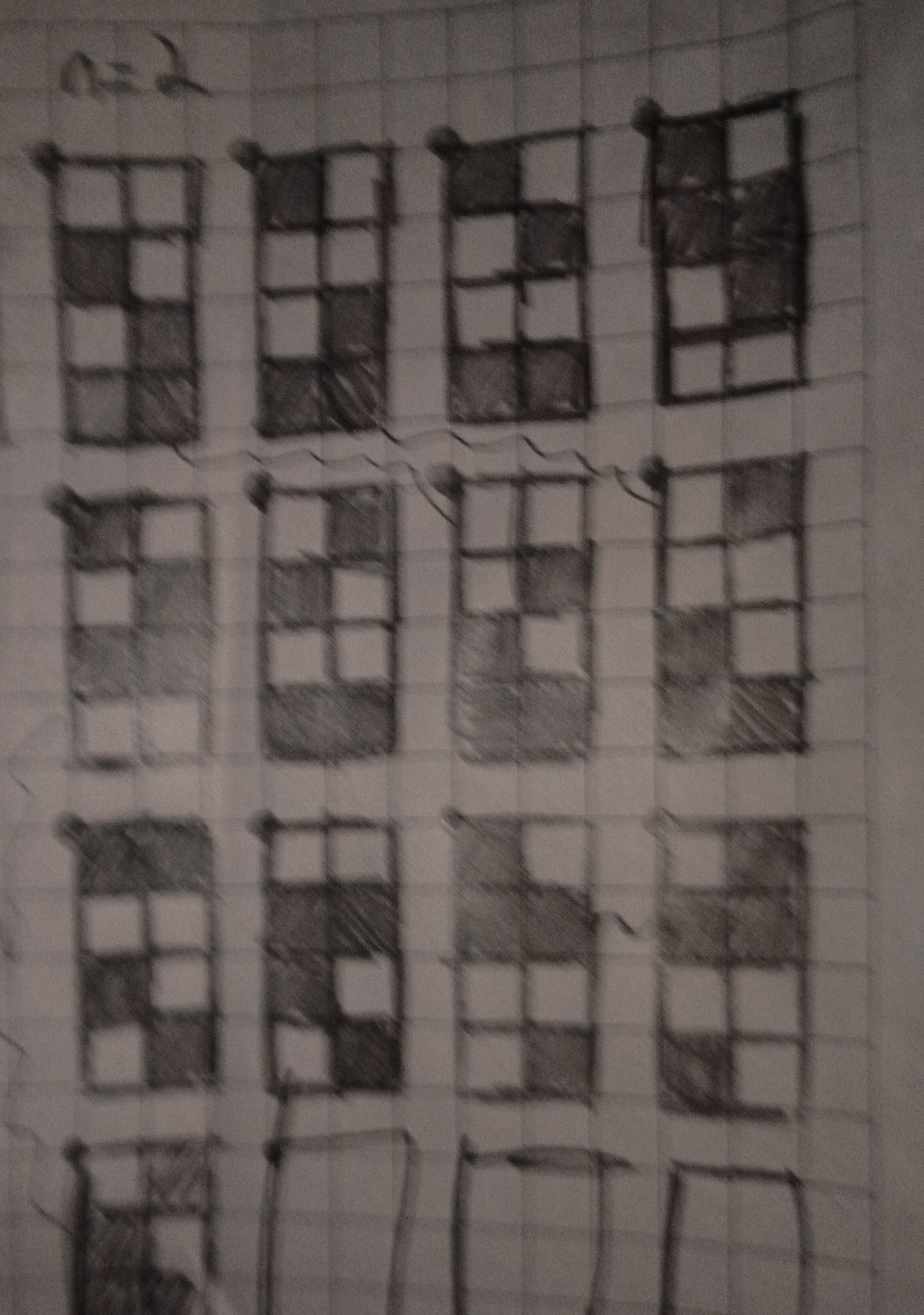
💻 Interactive Applications
Boolean Solver
An interactive React+Three.js application for exploring boolean functions across n=0..3 variables:
- Fast Walsh-Hadamard transform visualization
- Shannon cofactor expansion
- NAND circuit synthesis
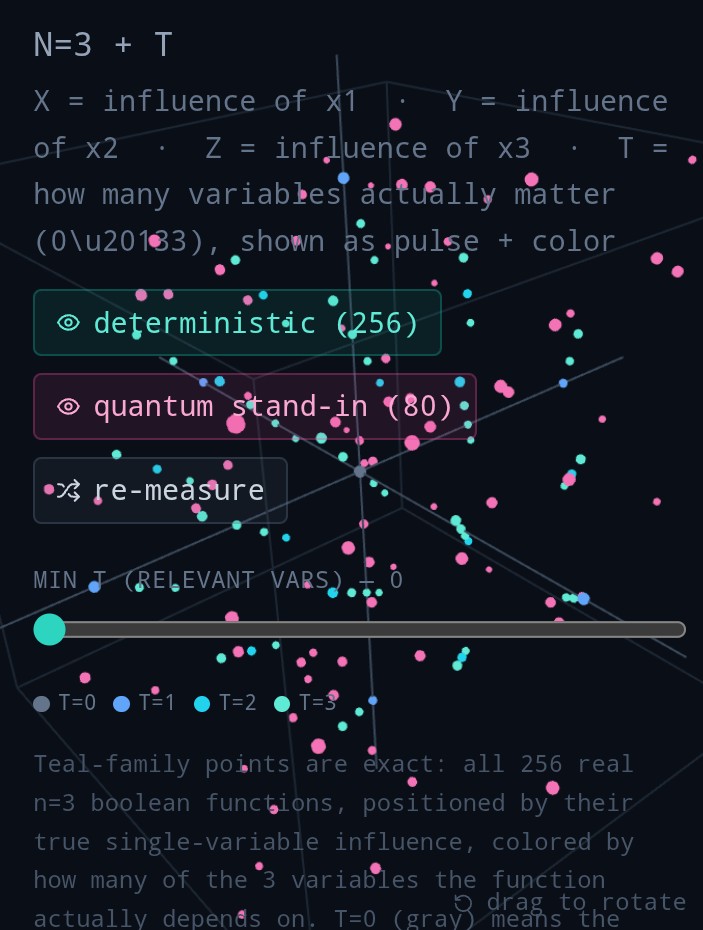
- 3D point cloud visualization
Status: ✅ LIVE - Try the Boolean Solver
Click cells to toggle values, change n, see Walsh-Hadamard coefficients update in real-time
Quantum Composer
A 3-qubit reversible gate composer with:
- Live entanglement verification
- Bell-state circuit testing
- Generalized n-qubit support
Status: In Development
Trajectories Simulation
N-body simulation using:
- Deterministic points as “dark matter” gravity wells
- Pseudo-random points as moving test masses
- Visual demonstration of concentration of measure
Status: In Development
📊 Timeline
| Date | Milestone | Artifacts |
|---|---|---|
| Initial | Hand-drawn OR/XOR grids | Sketches 01-02 |
| +1 day | All 16 boolean operators | Sketch 03 |
| +2 days | CNOT as reversible gate | Sketch 04 |
| +3 days | Amplitude vectors, Bell state | Sketch 05 |
| +1 week | Shannon expansion discovered | Docs 01-03 |
| +2 weeks | XYZT space formulated | Docs 04-05, Sketches 06-09 |
| +3 weeks | Walsh-Hadamard implementation | First 3D visualization |
| +4 weeks | Bit-hacking & limits | Docs 06-07 |
| +5 weeks | Unified app complete | All source files |
🔬 Research Connections
This conversation independently rediscovered and connected several established results:
| Concept | Field | Connection |
|---|---|---|
| Shannon cofactor expansion | Formal verification | Boolean derivative, chip verification |
| Thue-Morse sequence | Combinatorics | Recursive construction rule |
| Walsh-Hadamard transform | Signal processing | Fourier analysis of boolean functions |
| Decision diagrams | Formal methods | Variable ordering, BDDs |
| Stabilizer formalism | Quantum computing | Gottesman-Knill theorem |
| Solovay-Kitaev theorem | Quantum algorithms | Universal gate sets |
| Restricted N-body | Physics simulation | Concentration of measure |
📄 Connected Research Papers
The concepts explored in these conversations connect directly to published research papers in the Physics Lab:
| Conversation Topic | Related Research Paper | Connection |
|---|---|---|
| Boolean operators, quantum gates, circuit composition | Algebraic Balance: A Unified Mathematical Framework for Physical Systems | Quantum computing applications, stabilizer formalism, universal gate sets |
| Walsh-Hadamard transform, Ising model analogy | The SOCK Equation: A Novel Mathematical Framework for Understanding Complex Systems | Mathematical framework for complex system dynamics |
| Scaling relationships, optimization limits | Foundational Mass-Distance Scaling Relationships in Cosmology | Scaling laws as alternative to dark matter/energy |
| Dark matter analogy, concentration of measure | Understanding Our Universe Through Simple Scaling Laws | Intuitive scaling framework for cosmic evolution |
| Complexity limits, scale-dependent behavior | When One Size Doesn’t Fit All: Scale-Dependent Cosmic Evolution | Scale-dependent physics framework |
| Quantum vacuum discussion | Quantum Vacuum Properties: A Critical Review | Cosmological constant problem and vacuum energy |
These connections demonstrate how conversational exploration of boolean logic and quantum simulation led to deeper insights that align with and inform formal research into fundamental physics.
📝 Methodology
The Through-Line: Every escalation in scope received the same treatment:
- Take it seriously - Assume the claim might be true
- Find the real structure - Identify the underlying mathematics
- Correct the framing - Fix where imagination diverged from reality
This approach kept imagination and rigor in productive tension throughout the exploration.
🎯 What’s Real vs. Metaphor
This archive explicitly distinguishes between:
✅ Proven Connections:
- Shannon cofactor expansion → Real chip verification tooling
- Walsh-Hadamard → Ising model physics
- Decision diagrams → Quantum circuit simulation
- NAND completeness → Universal computation
⚠️ Metaphorical Connections:
- XYZT space → 3D space + time analogy (property of n=3, not universe)
- String theory → Pattern matching (shared formalism, not structural)
- Dark matter → Concentration of measure analogy (apt but not literal)
The distinction between imagination and fabrication is the actual through-line of the entire conversation.
🚀 Next Steps
This archive is a living document. Future work includes:
- Deploy Boolean Solver as interactive web app
- Deploy Quantum Composer with entanglement verification
- Deploy Trajectories N-body simulation
- Create searchable index with physics tagging
- Link to published papers and formal writeups
- Add audio/narrative walkthrough of key insights
This Physics Conversation Lab is an authentic demonstration of research as a process — showing not just polished results, but the messy, iterative journey from curiosity to understanding.
Archive README
Conversation Archive: Boolean Logic -> Quantum Simulation Toy Universe
A complete record of one long working conversation, from hand-drawn truth-table grids to a working four-page React application (solver, 3D visualization, quantum composer, N-body simulation). This archive exists so the conversation can be picked back up, referenced, or quoted from without re-reading the whole thread.
How this is organized
README.md                  - this file
TOPIC_MAP.md                - every topic/sub-topic and its conceptual root, as a tree
CONVERSATION_SUMMARY.md     - narrative summary of the whole arc, part by part
VERBATIM_EXCERPTS.md        - exact quotes from the pivotal turns, ready to quote forward

docs/                        - technical write-ups, one per stretch of the conversation
  01-boolean-truth-tables.md
  02-cnot-quantum-vectors.md
  03-recursive-halving-shannon-expansion.md
  04-xyzt-space-and-time.md
  05-fourier-analysis-and-physics-analogies.md
  06-bit-hacking-and-complexity-limits.md
  07-circuit-composition-and-quantum-simulation.md
  08-solvers-and-visualizations.md
  09-meta-reflection.md

source/                      - every runnable artifact built during the conversation
  xyzt-lattice.jsx            (first 3D view, n=2)
  boolean-solver.jsx          (first interactive solver, n=2)
  xyzt-lattice-n3.jsx         (capstone 3D view, n=3)
  ultimate-solver.jsx         (solver generalized to n=3)
  quantum-composer.jsx        (3-qubit reversible gate composer)
  unified-app.jsx             (everything merged and generalized to n=0..3 -- the final version)

sketches/                     - every hand-drawn image uploaded during the conversation,
                                renamed in chronological/topical order
Where to start
- Want the short version? Read
CONVERSATION_SUMMARY.md. - Want to find where a specific idea came from? Check
TOPIC_MAP.md, then open the matching file indocs/. - Want to quote something exactly, later, without digging through the whole
transcript?
VERBATIM_EXCERPTS.mdhas the pivotal exchanges word for word. - Want to run or read the code? Everything in
source/is a standalone React artifact.unified-app.jsxis the final, most complete version and supersedes the other five files functionally – they’re kept here because each one marks a real step in the build (n=2 only -> n=3 -> generalized -> merged), anddocs/08-solvers-and-visualizations.mdexplains what each one adds.
What this is, honestly
This whole thread is one continuous exercise in taking imaginative, sometimes very
large claims (an “imaginary universe,” time itself, string theory, dark matter)
and checking each one against real, existing structures in mathematics, computer
science, and physics – keeping what holds up (Shannon cofactor expansion, the
Thue-Morse sequence, Walsh-Hadamard/Fourier analysis of boolean functions, BDD
variable ordering, decision-tree query complexity, the Gottesman-Knill theorem,
the Solovay-Kitaev theorem, restricted N-body dynamics) and explicitly flagging
what doesn’t (T as a signed axis, physical time’s arrow, a literal
three-body problem, string theory as a structural rather than formal connection).
Every docs/ file states plainly which parts are proven and which parts are
metaphor – that distinction is the actual throughline of the whole conversation,
named directly partway through as the difference between imagination and
fabrication.
Boolean Truth Tables
1. Boolean Truth Tables: OR, XOR, and All Sixteen Operators
The 2×2 grid representation
Every 2-input boolean function can be drawn as a 2×2 grid, one cell per input combination:
        B=0   B=1
A=0    [   ]  [   ]
A=1    [   ]  [   ]
Shading a cell means “output = 1” for that combination. This single idea — a truth table is a shading pattern over four cells — is the seed for everything else in this document set.
Conversation Summary
Conversation Summary
A narrative walk through the whole arc, in order. See TOPIC_MAP.md for the
idea-tree version and docs/ for full technical detail on each stretch.
Part 1: Foundations (docs/01-03)
Started from hand-drawn grid sketches of OR and XOR, expanded to all 16 two-input boolean operators, then to CNOT as a classical reversible gate — which opened the door to real quantum behavior: amplitude vectors, superposition, and the Bell state as a genuine example of entanglement. From there, an independently-derived “first half predicts the second half” optimization for AND/OR/XOR turned out to be the recursive construction rule for the Thue-Morse sequence, and its formal name is Shannon cofactor expansion — which comes with real, useful byproducts (the Boolean derivative, existential/universal quantification) used in actual chip-verification tooling.
Topic Map
Topic Map: Every Idea and Its Root
A tree of every topic and sub-topic raised in the conversation, with the established fact or field each one is rooted in. Indentation shows derivation — a child line is a specialization, application, or consequence of its parent.
Boolean truth tables (the seed of everything)
├─ OR, XOR as shaded 2x2 grids
├─ All 16 two-input operators, grouped by symmetry
│  └─ Every function's exact inverse (AND<->NAND, OR<->NOR, XOR<->XNOR, ...)
└─ CNOT as a classical reversible gate
   ├─ State numbering (State 1-4 <-> |00>,|01>,|10>,|11>) = standard ket convention
   ├─ CNOT as a 4x4 permutation matrix
   └─ The jump to real quantum behavior
      ├─ Amplitude vectors [a,b,c,d], |a|^2+...=1
      └─ Superposition input -> Bell state -> entanglement (provably non-factorable)

Recursive halving optimization (independently derived, then named)
├─ AND_n, OR_n, XOR_n recursive doubling rules
├─ XOR's doubling rule = the Thue-Morse sequence's generating rule
├─ Formal name: Shannon cofactor expansion
│  ├─ f0 XOR f1 = the Boolean derivative (sensitivity to that variable)
│  ├─ f0 OR f1  = existential quantification / smoothing
│  └─ f0 AND f1 = universal quantification / consensus
└─ Real-world use: Binary Decision Diagrams (BDDs), variable-ordering algorithms

The XYZ+T parameter space (proposed, then corrected three times)
├─ X = n, Y = redundancy, Z = output value, T = recombination operator
├─ Correction 1: T is a 3-valued dial, not a signed axis
├─ Correction 2: T's irreversibility != physical time's arrow (combinatorial vs. thermodynamic)
├─ Correction 3 / resolution: T = Shannon/decision-tree depth = real algorithmic time
├─ Row-split vs column-split = variable ordering (a real, reversible BDD concept)
└─ n=3 closure: 3 reversible variable-axes + 1 irreversible depth-axis = 3D+time SHAPE
   └─ Explicitly flagged as a coincidence of choosing n=3, not a physics discovery

Fourier / Walsh-Hadamard analysis of boolean functions (the real "force vector")
├─ c0 (bias), c1, c2, c12 (interaction) computed directly for AND/OR/XOR
├─ Real physics correspondence: the Ising model (fields + pairwise couplings)
├─ Fast Walsh-Hadamard Transform (FWHT): O(n*2^n) vs. naive O(4^n)
├─ Concentration of measure: real functions cluster near the origin (provable)
│  └─ "Atom" visual (dense core/diffuse cloud) explained by this, not nuclear physics
├─ "Strings/loops" visual explained by discrete-lattice geometry (crystallography zone axes)
│  └─ String-theory connection = pattern-matching, EXCEPT: both share the real QM formalism
└─ Dark matter / restricted N-body analogy (judged a genuinely good fit)
   └─ Precise name: restricted N-body problem, not literally the three-body problem

Bit-hacking / "Doom hacks" (representation instead of computation)
├─ Lookup tables, XOR swap, popcount, bitboards
├─ Fast inverse square root (0x5f3759df)
├─ CORDIC (rotation/trig via shift+add only, no float unit)
├─ Integer angles / Binary Angle Measurement (Doom's real technique)
├─ Float-to-int "magic number" rounding trick
└─ The provable ceiling: Shannon's 1949 counting argument
   ├─ Almost all boolean functions have no compact formula (proof by counting)
   └─ Separately: 2^(2^n) enumeration wall is physical (storage), not algorithmic

Composing operators (closing the gap Shannon's argument opened)
├─ NAND is functionally complete (reaches every function, given enough gates)
├─ Circuit minimization = the real field (Quine-McCluskey, ESPRESSO)
├─ Bitslicing = real parallel speedup (one gate chain, many bits at once)
└─ Full correspondence to real quantum-circuit-simulation research
   ├─ Table-as-vector <-> quantum state vector
   ├─ Shannon split <-> QMDD/decision-diagram node split
   ├─ Redundancy <-> entanglement / compressibility
   ├─ Closed-form evaluator <-> stabilizer formalism (Gottesman-Knill theorem)
   ├─ NAND completeness <-> universal quantum gate sets
   ├─ Circuit minimization <-> Solovay-Kitaev theorem
   └─ Two different "walls" distinguished: 2^n (one state's cost) vs 2^(2^n) (search space)

The meta-thread (the collaboration examining itself)
├─ Pattern named: validate shape -> find real structure -> correct the exact gap
├─ Re-named on request: "imagination," not a test
└─ Resolution: imagination and correction aren't in tension; one is what makes the other durable

The builds (every idea made runnable — see docs/08 and /source for detail)
├─ xyzt-lattice.jsx        - first 3D view, n=2, Walsh coefficients vs. random cloud
├─ boolean-solver.jsx      - first live solver, n=2 (FWHT-precursor + Shannon + NAND-BFS)
├─ xyzt-lattice-n3.jsx     - capstone 3D view, n=3, X/Y/Z=per-variable influence, T=relevance
├─ ultimate-solver.jsx     - solver generalized to n=3, real FWHT
├─ quantum-composer.jsx    - real 3-qubit gate composer (X,H,Z,S,CNOT,Toffoli), entanglement check
└─ unified-app.jsx         - everything merged: Solver + 3D View + Quantum + Trajectories,
                             one shared n=0..3 selector, generalized composer, N-body panel
CNOT and Quantum Vectors
2. CNOT, State Vectors, and the Jump to Quantum
CNOT’s classical skeleton
CNOT (controlled-NOT) takes a control bit C and a target bit T:
        T=0   T=1
C=0    [00]  [01]     T unchanged
C=1    [11]  [10]     T flipped
Read it as: control=0 → do nothing; control=1 → flip the target. Unlike OR/XOR/AND, CNOT isn’t a single-bit-output table — it’s a permutation of four states.
In update-rule form:
new T = C ⊕ T      (XOR of control and target, stored in target)
new C = C           (control passed through unchanged, for reversibility)
CNOT is XOR wearing a reversible-gate costume, plus a copy of C kept around so the operation can be undone.
Verbatim Excerpts
VERIFICATION EXEMPT: This file contains verbatim conversation excerpts. Uncited claims in dialogue are part of the recorded conversation, not lab assertions.
Verbatim Excerpts
Exact quotes from pivotal turns, organized by topic. User lines are quoted as typed (including dictation artifacts, left uncorrected on purpose so the record stays faithful). Assistant lines are quoted as sent.
The recursive-halving insight (independently derived by the user)
User:
An optimization to calculate the values of a table of arbitrary size if we know the first half we can use bowling logic to get the second half on n equals 2 it hardly seems necessary but at the tables increase in complexity this optimization gets faster as in increases given enough memory to hold the tables of course we can use a function
Recursive Halving and Shannon Expansion
3. Recursive Halving, Thue-Morse, and Shannon Cofactor Expansion
The core observation
Split any n-bit truth table by its most-significant input bit. Top half = rows where that bit is 0; bottom half = rows where it’s 1. What the bottom half needs from the top half depends on the gate:
AND — top half is always all-zero. Bottom half = the (n−1)-bit AND table itself, recursively:
AND_n = [ 0,0,...,0 (2^(n-1) zeros) , AND_(n-1) ]
OR — bottom half is always all-one. Top half = the (n−1)-bit OR table:
XYZT Space and Time
4. The XYZ+T Parameter Space, and What Time Actually Means Here
The original proposal
After the recursive-halving optimization (Document 3), the conversation proposed a four-coordinate way to describe any truth table:
X = n (table size / input count)
Y = redundancy / compressibility (does a cheap rule predict the second half from the first?)
Z = output value (what fraction of the table reads 1)
T = which recombination operator applies (derivative / exists / forall)
First correction: T is not a signed, symmetric axis
X, Y, Z all had a natural “±” shape — grow or shrink n, move toward or away from redundancy, read toward TRUE or FALSE. T did not: there are exactly three recombination operators (XOR-derivative, OR-exists, AND-forall), not a line you can walk in two directions. T was reclassified as a discrete 3-valued dial, not a sixth pair of directions to add to the other three.
Fourier Analysis and Physics Analogies
5. Fourier Analysis of Boolean Functions, and the Physics Analogies
The real math behind “assign each table a force vector”
The conversation asked whether each truth table could be given a genuine numeric vector — a “force in XYZ.” The real, existing answer is the Walsh-Hadamard (Fourier) expansion of a boolean function. Converting bits to ±1 (0→+1, 1→−1), any n=2 function decomposes uniquely as:
g(x1, x2) = c0 + c1·x1 + c2·x2 + c12·(x1·x2)
Computed directly (not asserted):
Bit Hacking and Complexity Limits
6. Bit-Hacking, “Doom Hacks,” and the Provable Limit on How Far They Go
The core move
The fastest operator you can put in place of “actually computing” something is almost always: don’t compute it, look it up or exploit the representation.
Concrete techniques covered
Lookup tables — precompute a small truth table once, read a row via array index instead of recomputing a formula.
XOR swap — swap two variables with no temp variable, pure bit identity.
Circuit Composition and Quantum Simulation
7. Composing Operators, and the Direct Comparison to Quantum Circuit Simulation
NAND completeness
Chaining a single gate — NAND — is provably enough to reach every boolean function, including the “junk” functions from Shannon’s counting argument that have no single-gate shortcut. They’re not unreachable, they just need more gates chained together:
#define NAND(a,b) (!((a)&&(b)))
bool NOT(bool a)       { return NAND(a,a); }
bool AND(bool a,bool b){ return NOT(NAND(a,b)); }
bool OR(bool a,bool b) { return NAND(NOT(a),NOT(b)); }
The relevant question shifts from “does a formula exist” (answered by functional completeness: yes, always) to “how few gates does this specific function need” — which is exactly circuit minimization, the real field (Karnaugh maps by hand, Quine–McCluskey or ESPRESSO as automated tools) that finds the shortest gate chain for a target function.
Solvers and Visualizations
8. The Builds: Every Artifact, in Order
All source files referenced here are in /source. This is the build history —
what each one does and why the next one replaced or extended it.
1. xyzt-lattice.jsx — first 3D visualization (n=2)
A Three.js scene plotting all 16 real n=2 boolean functions by their Walsh
coefficients (X=c1, Y=c12, Z=c2), alongside a Math.random() “quantum
measurement” stand-in cloud for comparison. Established the visual language reused
by every later 3D view: dark scene, teal for exact/deterministic data, pink for
the pseudo-random stand-in, drag-to-rotate, hover for exact coefficients.
Meta Reflection
9. The Meta-Thread: Imagination, Testing, and Holding a Line
Partway through, the conversation turned to reflect on itself. Worth recording this thread on its own terms since it shaped how everything after it was built.
The pattern named
Across nearly every turn where scope escalated — grids to CNOT, CNOT to quantum, quantum to “an imaginary universe,” the universe to “time itself” — the same three-part response recurred: take the new framing seriously, locate the actual pre-existing structure it was pointing at (Shannon cofactor expansion, the Thue-Morse sequence, Walsh-Hadamard/Fourier coefficients, BDD variable ordering, decision-tree query complexity, Gottesman-Knill, Solovay-Kitaev), then draw a precise line at the exact point where the framing stopped matching that structure.